End of season promotion applied in the basket: -10% on the entire range for any order placed until 11/30/2025

Creating pieces of furniture designed and produced in Wallonia: a challenge taken up (and met) by the Liège-based duo behind the Bandi label.
Bandi is a family affair. The story of two cousins, Olivier Collette and Thomas Crucifix, with complementary profiles. The first is an architect. The other is trained to develop and market hard-hitting marketing ideas. Together, they have launched Bandi, a label centered on a single product: an aluminum table and bench, designed for indoor and outdoor use, entirely produced in Wallonia and distributed through short distribution channels. We met Thomas, the man in whose head the Bandi adventure first began, in Liège, where it all began.
How did this adventure come about?
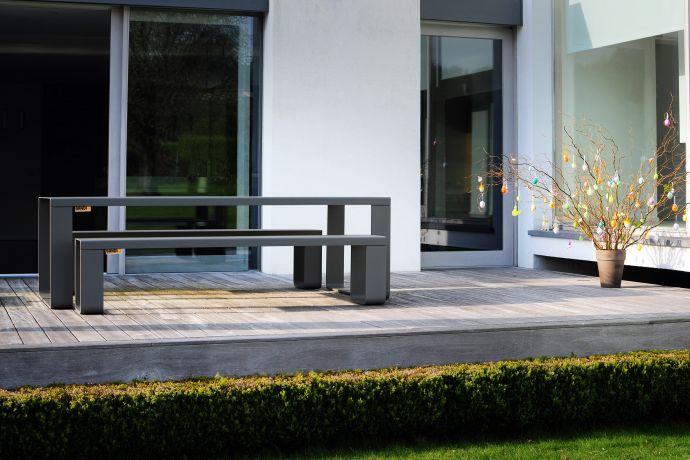
Neither of us are designers. Originally, I designed this simple bench for myself, on instinct, to meet a real need. I couldn’t find what I wanted on the market. At least not at a price that suited me. When I had the idea of marketing it, I was advised to add a table. And when it came time to work out technical solutions to produce these two pieces on a larger scale at acceptable costs, Olivier stepped in. He helped me refine the product, correcting certain lines to improve aesthetics and reduce manufacturing costs.
Why did you take on the challenge of “made in Wallonia”?
Firstly out of conviction. Because I was fed up with Walloon pessimism, with people complaining about Chinese competition without reacting or lamenting the end of the Walloon steel industry. With Bandi, we opted for action. In Wallonia, in the design sector, there are many small talented craftsmen, but few brands.
And of those that do exist, the majority are content to finalize their product in Wallonia. The rest is made elsewhere. Hence our desire to create a 100% Walloon label with real international ambitions. In 2017, we sold 50 sets (table and benches). We expect to double this figure in 2018.
In your communication, you say you wanted to create a “user-friendly” product. Beyond the marketing message, what do you mean by this?
In my opinion, good design is about emotion. As I said, the bench was originally intended to fit into my home. I conceived my home as a large party room (he laughs). A place where you can improvise a dinner for ten people over a bottle of wine and a plate of pasta…
Bandi furniture is designed for both indoor and outdoor use. Which niche works best?
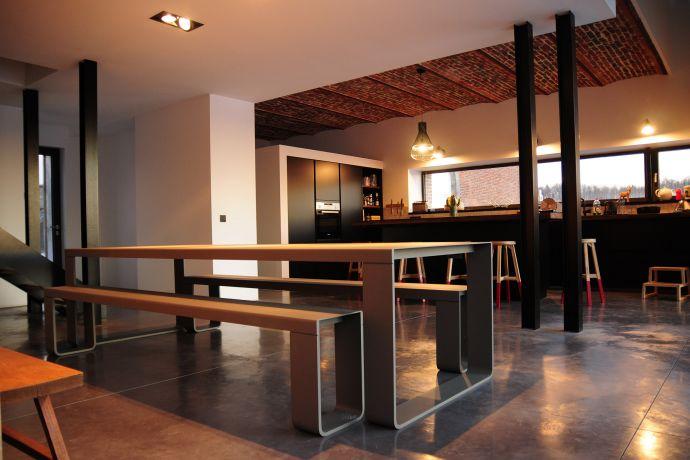
The garden market accounts for 65% of our sales, but we’ve also placed the table in architectural offices and homes. From the outset, I didn’t want to confine myself to a niche market that I knew to be too “niche”. Bandi is a product that can be sold all year round. The table is available in eight colors, with many more on request.
Is personalization also a highly commercial marketing concept?
Yes, but here again, this choice is in line with Bandi’s philosophy. We’ve opted for an ultra-transparent pricing policy. All our prices are listed on our website. Few players in the industry can say as much. When the color chosen by the customer is available from the manufacturer, we offer it to our customers at no extra charge. We love to see our table in orange or fuchsia. And of course, it’s an excellent showcase.
What kind of Walloon partners did you turn to for production?
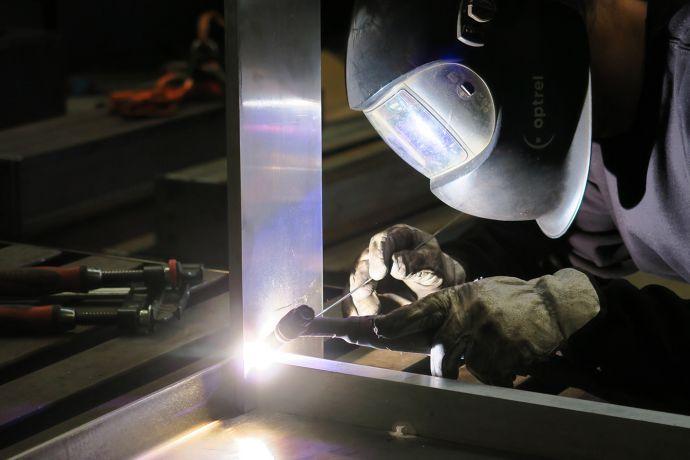
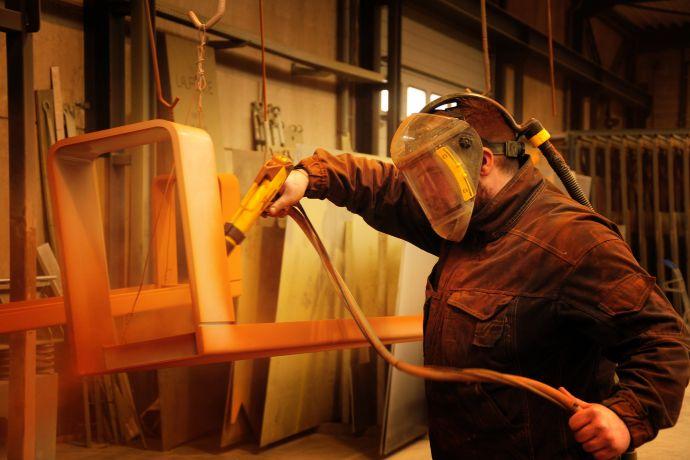
We work with three subcontractors: RG Georis, in Romsée, near Liège, for the raw materials. This company, which supplies us with aluminum kits, works for well-known designers such as Xavier Lust. The kits are then sent to Prosoudure in Seraing, before being micro-sanded and powder-coated at Fréderic Walhin in Ouffet. Since the launch of Bandi, two workers have been hired by these companies to ensure the production of our furniture. This dynamic fits in with our philosophy.
Fast fashion is much criticized. Do you think this kind of preoccupation also affects the furniture sector?
In any case, our customers are very sensitive to the local aspect of production. Without really having established precise statistics in this area, I’d say that this notion plays a 50% role in the purchasing decision. People want sustainable products at a fair price. For a brand like ours, this requires a global approach. When we considered exporting the concept to South Africa, we realized that production costs there were higher than at home. Proof that it’s possible to make beautiful things at reasonable prices in Wallonia.
Is short circuits and sales without intermediaries a new direction for the design sector?
Given our pricing policy, this was an obligation. To go through distributors would mean raising our prices by 30%. So we work with specifiers (mainly architects) and local partners, who showcase our furniture and give us direct visibility. In fact, we like to say that we’ve replaced the concept of “point of sale” with that of “point of view”. Customers need to be able to see and touch the product before making a decision. And this within a 50-kilometre radius of where they live.
Is your idea to stick with a single-product concept?
For the moment, yes. We launched the brand a year and a half ago. We need time to establish it. Take a company like Fatboy, for example. They started with a strong product: the footstool. Then, in a second phase, they launched ancillary products. We’re currently working on a low and high version of the table, but nothing will be launched before 2019.
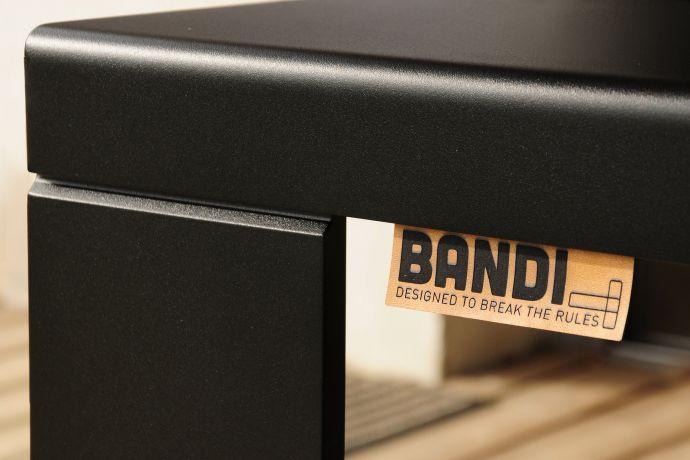
Can we call you the Walloon design “bandits”?
What’s certain is that we want to break the mould and offer a different approach to design. At the time of its launch, to create a buzz around the product, we organized a clandestine barbecue in front of Liège station in collaboration with Tole, another Walloon brand specializing in Corten steel braziers. The police dislodged us after six seconds (he laughs), but the intention was clear: to convey a fun, local, no-holds-barred message.